
Thrombectomy with Neva on a centenarian patient!
🧠 #NeVa Mechanical Thrombectomy Case
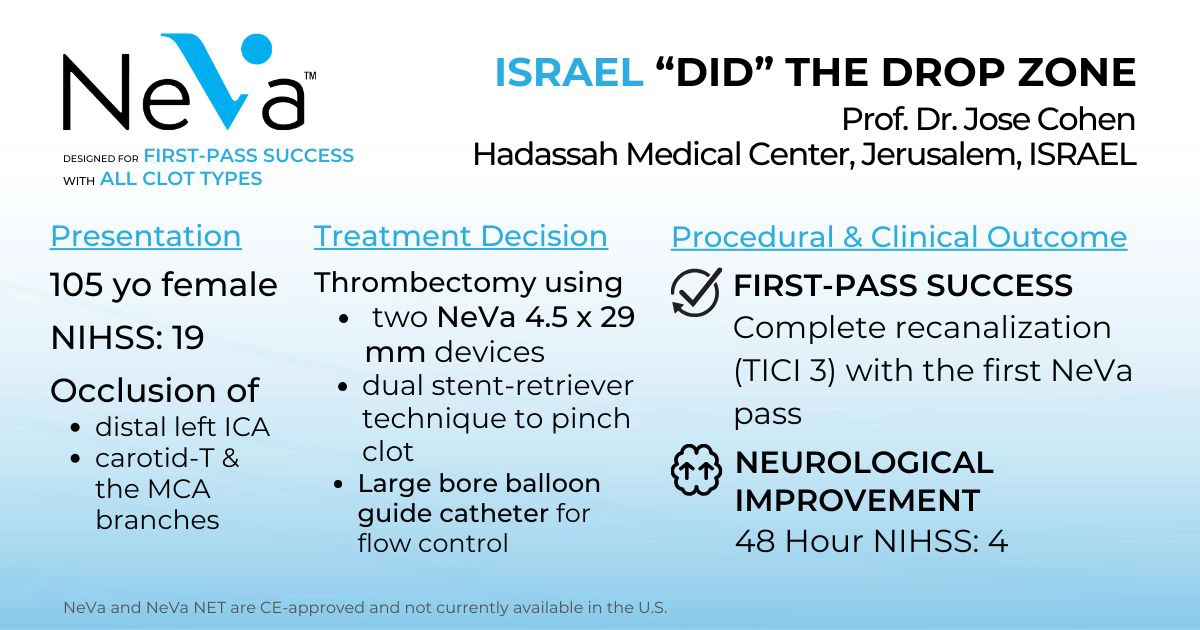
Double Stent Retriever Technique with NeVa on a Centenarian Patient, performed by Prof. Dr. Jose Cohen from Hadassah Medical Center, Jerusalem, Israel.
PRESENTATION AND PROCEDURE
• 105-year-old female
• NIHSS of 19, five hours after symptom onset
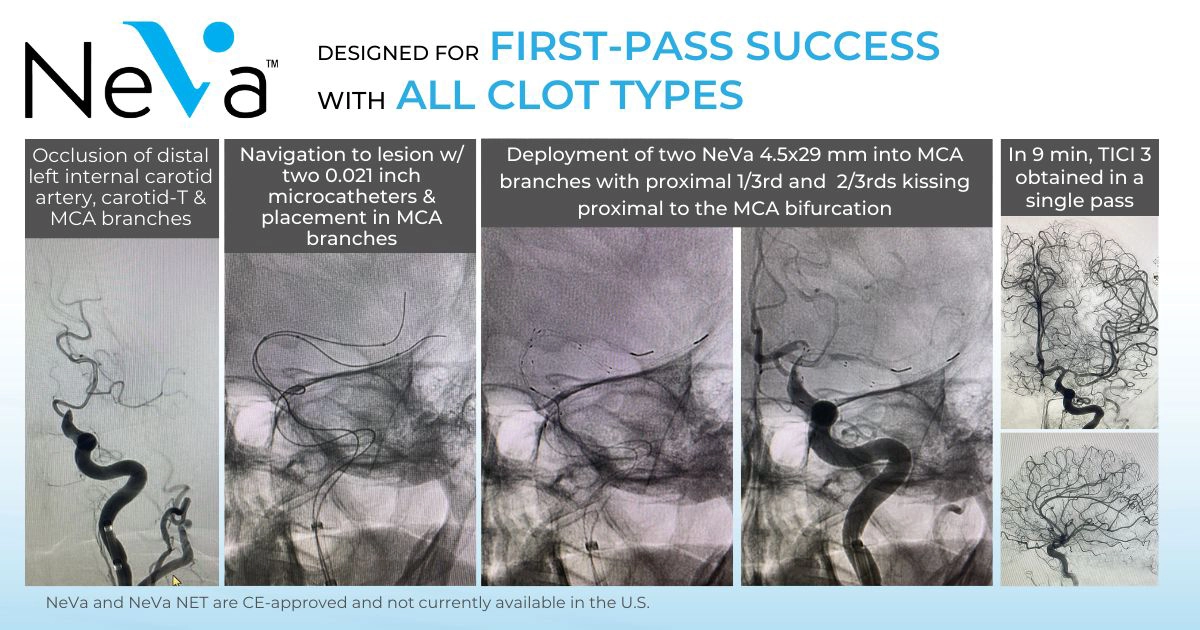
• Imaging confirmed a distal left ICA occlusion, carotid-T segment, and MCA branches
THROMBECTOMY PROCEDURE
The double stent retriever technique was used, employing two NeVa units (4.5 x 29 mm) to pinch the thrombus. A large-diameter balloon guide catheter was used for flow control.
PROCEDURAL OUTCOME
Complete recanalization (TICI 3) on the first pass with NeVa
CLINICAL OUTCOME
• Significant amount of thrombus retrieved in the device
• NIHSS at 48 hours: 4
PROF. DR. COHEN’S STATEMENT:
“In cases like this, most of the thrombus is usually located in the distal ICA and proximal MCA. To increase the effectiveness of the stent retriever technique and reduce the number of passes needed, the double stent retriever option was chosen. Two NeVa stent retrievers were used, each positioned in one branch of the bifurcation, with partial overlap in their proximal and mid-third sections. This approach effectively optimizes thrombus capture in long, distinct segments, simultaneously forming a pinching structure at the MCA bifurcation.”
NeVa is CE-approved.